Nothing prepared Mina and her sister for the life-changing trauma that unfolded on that sweltering August day. La Casa Lara, a modest hut on stilts, stood out from the rest of the village. It was painted pale turquoise-blue, like the beautiful Caribbean Sea on the Atlantic side of what was soon to be Panama. Like a worn, faded jewel box, it stood in the soft golden afternoon light. Its interior was decorated with vibrant Kuna textiles and crafts. It sat at the edge of a sleepy, modest working-class Kuna village, where people lived in 40 tukul huts built of cane and straw, sustained by sweat and hard work. The house was the hub of a small, self-sustaining ranch and dry-goods store tucked away near the Colombian border. Mama Amalia Pinzoń Lara, the Kuna matriarch, ran the only dry-goods store in the community. The Lara family was busy with their afternoon chores. Amalia stood by her glowing wood stove, preparing this evening’s supper of freshly caught fish and plantains. Josefina Andrades and Emma Zapata, the two older daughters from two previous marriages, helped her chop crisp red and green peppers on a wooden stump. A large table was covered with plantain leaves and all sorts of fresh tropical fruit. 6 of the younger children, all of mixed heritage, played noisily in the dusty yard. Amalia’s third husband, Senior Locario Lara, a Spanish Jewish immigrant with shocking red hair (El Colorado), made his rounds around the village, trading gleaming pots and dishes. He had twin daughters with Amalia Pinzón, whom he nicknamed Café y Leche.

“Café, hurry up, niña,” Mina called to her little sister. The two sisters were in the Panamanian rainforest, on the border of Colombia and what would soon be called independent Panama, picking berries as dappled sunlight fell all around them. Sweat beaded on their foreheads in the stifling, humid air. The fragrance of blossoming orchids and wet earth hung in the air. Large leaves still held pearls of water droplets from the earlier rainfall. Laughing and giggling, they picked a few blackberries, tasted a few, and put some in the basket. Their mouths dripped with sweet berry juice, and they wiped their hands on their pretty gingham dresses, leaving purple handprints. Mina, 12, had dark, dense, curly black hair and deep brown eyes. She was skinny and lanky. Cheres (Café) was 4 years old, with short, silky hair, almond-caramel-brown eyes, and dimples. They were both barefoot and used to walking on the soft forest floor. The chirping of crickets and other chittering noises blended into the rainforest’s rich symphony.
A long, loud whistle, a crack, and then a boom! startled the girls. They dropped the basket of berries and ran. Mina, with her long legs, pulled ahead of Cheres, soon losing sight of her younger sister. “Café!!” she called out, desperate, looking around. A short distance away, she could hear the villagers’ commotion, yelling and screaming. “Café!!!!!” she shrieked again and again, rivulets of tears streaking her red-hot face. The booms thundered on, and gray-yellowish pillars of smoke billowed from the village, darkening the sky. The pungent, musty odor of burning wood and straw filled the humid air. The snap-crackle of fire and more screams continued.
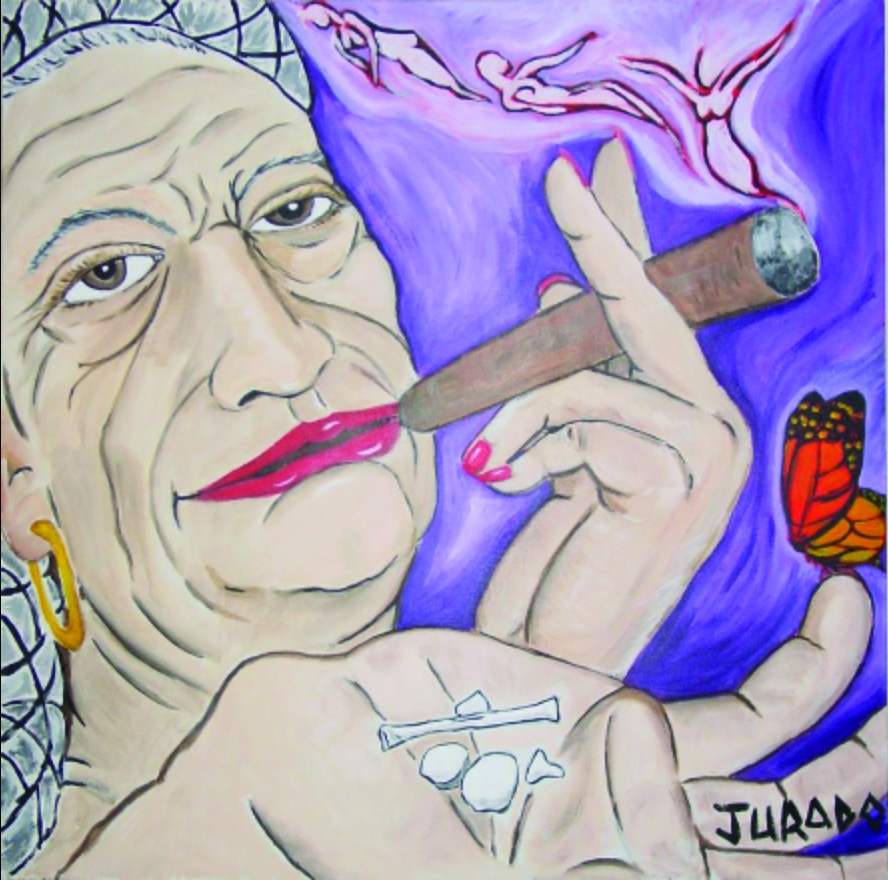
It’s 1968, Mina’s New York apartment in Washington Heights. Her apartment faces the building’s back alley and is smaller than the one across the hall, where her sisters-in-law, Julia and Maria, live. Her twelve-year-old niece, who also lives with Julia and Maria, has come to visit her great-aunt Mina. She arrives, bouncing on her feet with excitement, bearing a freshly baked coffee cake from Maria. Elizabeth loves spending time with her very interesting and eccentric great-aunt Mina. There is so much to look at. Aunt Mina’s place is packed with exotic knick-knacks, colorful ceramic and glass ashtrays, Spanish fans, dolls, and wooden artifacts. Silk flowers in vases, along with all kinds of tropical plants that Aunt Maria doesn’t keep in her apartment, fill the space. Intricately woven linen doilies cover the large, overstuffed, flowered furniture. The distinctive scent of roses, jasmine, and orange blossom permeates the whole apartment. Aunt Mina, now in her 80s, is a serious, elegant lady who walks with a hand-carved wooden cane, her gray, curly hair packed under a hairnet. She always has a smile for her niece. She invites her to sit in the parlor, which makes Elizabeth feel like a grown-up on a proper visit. Elizabeth notices a lit, fragrant cigar on one of her aunt’s fancy ashtrays next to her big chair. Aunt Mina quickly puts it out and sits in her big chair, winking at Elizabeth.
“Thank you for the coffee cake. Would you like some tea?” “No, thank you, Tia. Can you tell me another story, pleeease?” Aunt Mina always had fantastic stories to tell: legends from the old countries of Panama and Colombia; stories from her early days in New York; and tales about circus performers, fortune-tellers, and gypsies. She would sometimes pull a small bag of bones from the side pocket of her chair and read Los Huesos (the bones). Elizabeth would be completely mesmerized by this mystical Great Aunt. She wanted to learn to read Los Huesos, and Aunt Mina patiently taught her. Aunt Mina also taught her to read Tarot cards and tea leaves, and to play the old-fashioned game Canasta.
Today, however, Elizabeth could clearly hear tink-a-ling and music from the alley. The window was open. “Go ahead, see what you can see,” Aunt Mina encouraged. In the alley below, a man in a brown overcoat and an old hat was turning the crank on a very fancy, colorful music box. A skinny capuchin monkey, dressed in a red coat and a top hat, was dancing merrily around him.

Aunt Mina lived with her nephew, Elizabeth’s father, Albert. He had a small room to the left of hers. Elizabeth’s parents had separated 5 years ago, and he had returned to the old apartment where he grew up. Aunt Mina inherited the apartment from her sister, Catalina, and her brother-in-law, who had raised their 6 children in that small apartment and now had a house on Long Island. The window to the alley was in her bedroom. A pair of French doors separated the bedroom from the parlor. Aunt Mina’s bed was a heavy, carved wooden four-poster queen bed that took up most of the room. She had a beautiful Spanish doll on her pink, silken bed linens. Many perfume bottles, Majá talcum powder, and fancy combs were on the dresser. Old pictures of relatives in silver and wood frames hung on the walls. “What do you see?” Aunt Mina called out from her chair in the parlor. “A man with a big brown overcoat playing a beautiful music box and a monkey dancing,” Elizabeth replied.
Mina was exhausted and hoarse from calling out to her little sister, searching for her in the dense, now-darkening forest. Her heart pounded against her chest as if it would burst. Everything seemed surreal, like an out-of-body experience. What is happening? This can’t be happening! she thought. She could hear her own blood rushing in her hot ears. The noise from the village had died down, leaving only an occasional crack and pop! Dark gray, stifling smoke pushed down on her, making her breathing labored. She gave up searching for her little sister and returned to what was left of the village. The village lay in ruins, with bodies everywhere. A few listless souls wandered aimlessly, picking up random pieces of their belongings. The sickly, acrid stench of blood and fire hung in the air. Her family home and family were gone. Nothing left, just fire and ash. She collapsed to the ground in shock and disbelief.
One of the villagers helped Mina to her feet. She then made her way into the city and to the Governor’s house. The Governor and his family took her in as a governess for their children. Wanting to flee the conflict, they were packing to go to America and took Mina with them. They departed by ship from Colon on the Atlantic side of Panama, following the Caribbean Sea route, heading north past Jamaica and Cuba, through the Gulf of Mexico and the Florida Straits, to the US Northeast coast, New York Harbor, and Manhattan. It was a long and arduous 14-day journey. Mina stayed with the family until she became of age. Soon, she became well established in New York and, after a few years, ventured out on her own.
Mina returned to Panama 10 years later to look for her sister and found her at the Catholic Orphanage of the Daughters of Charity. Cheres, now called Catalina by the nuns, was alive and well cared for. The nuns reported that Catalina had been found in the rainforest by a different indigenous tribe, which had taken her in. While making their rounds among the tribes, the nuns found Catalina living as if she were one of them. She lived among them for over a year. Catalina was extremely happy that her sister had come back to find her; however, she intended to stay at the convent and become a nun, so Mina returned to America alone.
The years passed, and Catalina, now 21 and ready to take her final vows, came to America to visit her sister Mina for a final farewell. New York seemed to Catalina like a concrete jungle, loud, busy, and intimidating, a stark contrast to the peaceful serenity and introspection she had known at the convent. Her sister’s life in the city was exciting and unlike anything she had known. She knew all sorts of eclectic people: artists, musicians, poets, journalists. She took Catalina to a party with her friends in the lively community. A handsome young man with smoky dark eyes approached Catalina. He was an engineering student at Columbia University. That party changed her fate forever. James stole her heart the moment she set eyes on him. They started dating, and after 6 agonizing months, they married. The decision was not easy, given her devotion to God and the Daughters of Charity.
The Thousand-Day War ended in November 1902, a long, brutal war that pitted brother against brother. The rebels seeking Panama’s independence from Gran Colombia received support from the United States and military assistance. In mid-1902, while the girls were picking berries in the rainforest, their village was destroyed in the conflict, and their family was killed when cannonballs struck the house. Cheres remained lost in the rainforest. Terrified, the 4-year-old hid even more. What little of the sky she could see was bruised purple and red, and the roar of cannons and stifling pillars of pungent smoke from the fires filled the air.
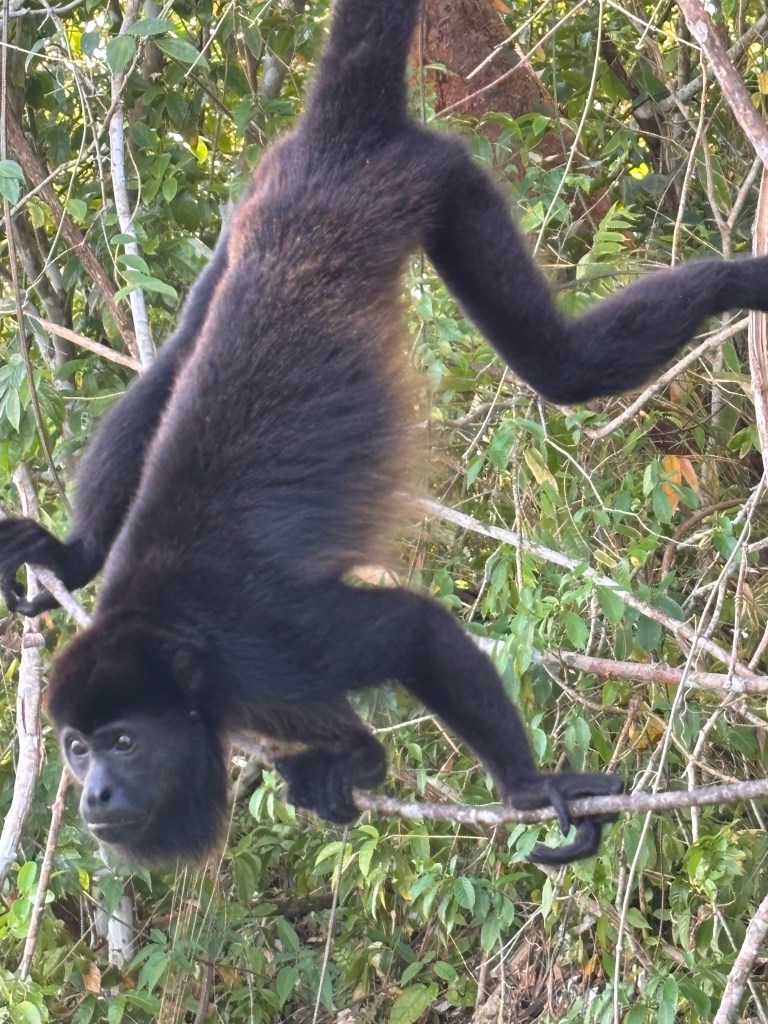
Cheres made her way deeper into the inky darkness, farther from civilization. Howler monkeys, their throats booming warnings, swung up into the highest tree branches as this little girl stumbled in the sweltering heat, whimpering as she went deeper into the deadlier parts of the deep forest. The creatures were as afraid of her as she was of them. Iguanas, snakes, and other reptiles scurried along the ground and up trees. The rainforest was alive with creeping, slithering, and jumping. Instinct told her to be brave and keep going. She finally reached the river’s edge on the other side of the forest. The borderline between her people and the Embera. The river was a deafening cascade of water tumbling over jagged, flat, slippery rocks. The passage was almost impossible and dangerous. One slip and she would be carried down the river with a backbreaking roar. Cheres crawled over the rocks, as if hanging on to her life. Sometimes, on all fours, her bare feet kept getting scratched and cut on the edges of the rocks. The sky opened up all at once, and the rain pounded her like tiny daggers. It was as if the fury of life had unleashed everything on her at once, as if the dark, scary rainforest wasn’t enough of a test of her courage.

A small Embera hunting party found Cheres shivering at the river’s edge. In shock, she had lost her voice and could not speak. They took her to their village, where they offered her protection. There, she stayed for over a year, learning their ways and being cared for by the community. She learned their language, learned to swim like a fish and to catch fish with her bare hands, learned to sing and dance the soulful Dance of the Two Sisters, and learned to carve animals from small pieces of cocobolo, like the other children in the village. Cheres was now a free spirit, a brave daughter of the rainforest. She felt safe and at ease among the Embera. Little Cheres stood out from the other children because of her lighter complexion and lack of tattoos. She had not yet reached any milestones that would warrant a beautiful, permanent tattoo.
Cheres (Catalina) Pinzoń Lara, “La Chinita,” as her school friends called her back in the day at the orphanage, stood quietly in her pink housecoat at the stove, stirring her pot of intensely aromatic “Sopa de Pollo.” Her smooth, rounded face belied her true age, and her almond-shaped, dark Café Caramelo eyes spoke of her rich Indigenous, Spanish, and Jewish heritage. Four of her rambunctious grandchildren plowed through the back screened door, which squeaked furiously, bursting with excitement. They had collected blackberries from the overgrown field next to the property and wanted her to make her delicious blackberry pie. Catalina smiled and accepted the basket of berries. She gave them Kool-Aid and cookies for a snack. They gobbled the cookies and slurped the Kool-Aid breathlessly, eager to get back outside. But first, she had to play nurse and clean and mend a few scratches. The field was full of thorns, insects, and other hazards.
A grouchy old man, smelling of outdoors and tobacco, with thick, dense eyebrows and a brown face weathered by time, walked through the back door now, shooing the children out of the house. James, Santiago Jesus, was not an easy man to live with. He was Colombian, proud, and controlling. He was an aircraft mechanic and a World War I army veteran. He offered her stability, a safe home, and children. In exchange, he could be demanding at times. James was a man of few words but many political opinions. He made his way through the kitchen and into the living room, plopping down like an old suitcase with broken straps, settling into his favorite big chair in front of the TV set. He picked up his favorite smoking pipe and a small bag of loose, sweet-smelling tobacco, then began his afternoon ritual, puffing his pipe and discussing the day’s news on TV out loud to no one in particular, since Catalina just smiled and continued with her dinner preparations.
Her husband mostly kept to himself, always fixing and adding to the house and backyard. She had six adult children and eight grandchildren. Her modest two-bedroom red-brick bungalow in Farmingville, Long Island, stood in the middle of an open forest of birch trees, across from the homes of her two daughters, both registered nurses, Francis and Josephine, and their families. Her two older sons, George, a career Air Force major, and his wife, lived in North Dakota. Albert, an engineer and Navy veteran, is now divorced. Her other daughter, Yolanda, also a nurse, lives in New York City. Elizabeth, the youngest daughter, died in her early twenties. Catalina’s home was affectionately known as “El Campo,” where the family always gathered on holidays.
Catalina danced the Dance of the Two Sisters alone in the kitchen. Reminiscing about her time in the rainforest and among the Embera, she opened a couple of cans of Puss and Boots to feed the kittens that lived outside under the house. She opened the screened back door, and the kittens tumbled over one another to reach the food. In the distance, she could hear the children playing and laughing. Catalina closed her eyes and breathed in the fresh spring air. She called the children to come in for supper. The fragrant blackberry pie cooled on the kitchen counter, and the grandchildren elbowed each other toward the bathroom sink to wash their hands and faces.
Elizabeth’s visit with Aunt Mina was drawing to a close. Aunt Mina rose from her big chair and began to dance. “Dance with me,” she said to Elizabeth. They danced the Dance of the Two Sisters. Aunt Maria knocked on the door, calling Elizabeth back for supper. The man in the alley had stopped playing his music box.


 GrowingOlderHopeWiser
Leave a comment